Current Research Interests

The ability to see the cell's molecular machinery at work has contributed immensely to our understanding of cellular functioning. Optical microscopy in combination with selectively labeling of molecular compounds lies at very foundation of our ability to zoom into the microscopic world of cells. Thanks to the molecular sensitivity of fluorescence microscopy, the cell's dynamic pathways can now be followed with high spatial and temporal resolution.

Despite the triumph of fluorescence microscopy, there are several complications associated with the use of fluorescent labels, which can significantly compromise certain applications in cellular and systems biology.

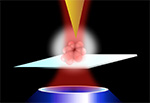
Chemically selective imaging without fluorophores can be achieved with vibrational microscopy. The intrinsic molecular bond vibrations leave molecular specific fingerprints in the vibrational spectrum. However, the weakness of these spectroscopic features have limited the use of vibrational contrast for real-time cellular imaging. But not anymore. In recent years, new molecular imaging techniques, such as coherent anti-Stokes Raman scattering microscopy, or CARS in short, have been developed for rapid vibrational imaging of living cells. In our work, we advance and apply novel imaging techniques for unveiling the molecular secrets of microscopic biological systems.


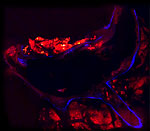
Water Diffusion in Epidermis

With an area of about 18 square feet, the skin is the largest organ of our body. Perhaps the most stunning physical property of the skin is its ability to counter our body’s water loss. Due to the unique water permeability properties of the upper layers of the skin, the so-called epidermis, the hydration of the underlying layers is kept at about 70%.

The part of the epidermis that controls the permeability of water and other chemicals into the skin is the stratum corneum (SC). It is the very upper layer of the skin, measuring only 15-20 mm across. Without this layer, the hydration of the body would literally plummet to fatal levels. Despite its importance, the exact mechanism of water diffusion through the SC is poorly understood.  Above all, essential experimental support, in the form of the direct observation of water dynamics at sub-cellular resolution in vivo, is simply lacking. We are trying to fill this void by employing CARS microscopy to directly visualize water diffusion in this elusive layer.


Nonlinear Interferometric Imaging

What happens if the CARS signal is mixed with a coherent beam of the same color? Not surprisingly, we will see interference. The interfering CARS signal has very interesting properties. One of these properies is that the signal is now linear in the concentration of Raman active molecules. The spectrum of the interferometric CARS contribution is also directly proportional to the Raman spectrum. And there is another bonus: CARS interferometry gets rid of the nonresonant background. We are exploring several strategies for optimizing CARS imaging with interferometric sensitivity. One of our CARS interferometry solutions is based on anti-Stokes generation in a photonic crystal fiber (in collaboration with Prof. Keiding of the University of Aarhus, Denmark). The intense picosecond anti-Stokes radiation generated in such a fiber is ideal for interometric mixing applications.

Figure 1. Efficient generation of anti-Stokes radiation in a 14-mm piece of photonic crystal fiber. The red spot in the photo is the anti-Stokes light generated with 50 mW of 816 nm pump and 30 mW of 1064 nm Stokes in the fiber.


Focus Engineering in Nonlinear Microscopy


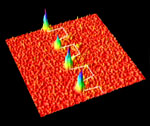
In coherent microscopy, the detected signal results from the coherent addition of the waves emanating from focus. The phase of the individual waves is very important in this addition process. It is no surprise that different signal strengths can be obtained if the phase profile in focus is changed. The phase distribution in focus can be altered if one makes use of phase shaping of the incident light beams. We explore the various imaging properties of nonlinear coherent microscopy as a function of different phase engineered incident beams. In CARS microscopy, for instance, certain phase profiles will lead to suppression of the bulk background signal, while chemical interfaces are highlighted. Phase engineering in coherent microscopy offers new opportunities for accentuating subtle features of the microscopic samples.


Figure 2. Calculated CARS signals of a right-angled corner and a spherical bead using incident fields with alternative phase profiles. Using these special beam shapes, bulk signals are reduced while chemical interfaces are highlighted.